News, Big story, Entertainment, Lifestyle, Love, Beauty, Inspiration and yes... Gossip!
Sunday, January 27, 2013
Sunday, January 20, 2013
Here comes the new king (er, prince?) of Twitter
(CNN) -- Sometime on Sunday, the world will lurch a little on its axis. There'll be a thunderclap heard around the globe, a blinding flash of light, and the people of the Internet will fall to their knees in reverence.
On that day, Justin Bieber will pass Lady Gaga as the most followed account on Twitter.
As of Friday afternoon Gaga had more than 33,198,000 followers -- some 46,000 more than Bieber, who was close behind at 33,152,000. (That's more than the population of Peru.)
But The Biebs is gaining fans at a faster rate, and according to Twitter Counter, which forecasts such things, he will pass Gaga on Sunday between 4:23 p.m. and 4:24 p.m. ET.
The carefully coiffed li'l crooner will become Twitter's first new king or queen (er, prince?) since Lady Gaga dethroned Britney Spears in August 2010 -- way back when 5 million followers was a big deal. (For some reason, 7 of the 10 most-followed Twitter accounts are singers.)
But can his Beliebers keep him on top? Will Gaga's Little Monsters mount a comeback? Or are the two pop stars fated to battle for Twitter supremacy for months, or years to come? Oh, the drama!
Now, as they say in boxing, for the Tale of the Tape. Let's measure these dueling tweeters, toe to toe:
Age
Gaga: 26
Bieber: 18
Birthplace
Gaga: New York City
Bieber: London, Ontario (that's Canada, people)
Albums
Gaga: 3
Bieber: 3 (his fourth, "Believe Acoustic," will be released January 29)
Grammy nominations
Gaga: 15
Bieber: 2
Grammys won
Gaga: 5
Bieber: 0
Time on Twitter
Gaga: 4 years, 11 months
Bieber: 3 years, 10 months
Recent tweet
Lady Gaga
✔
@ladygaga
So proud of @justinbieber and all the Beliebers! I'm only happy to see your fans growing in size, you all deserve it! Monsters support you!
15 Jan 13
Reply
Retweet
Favorite
Justin Bieber
✔
@justinbieber
6 years ago today u all started to change my life. Thank u. Love u. #stillkidrauhl
15 Jan 13
Reply
Retweet
Favorite
Number of tweets (as of Friday)
Gaga: 2,583
Bieber: 20,478
Not-so-secret secret
Gaga: Has 14 tattoos
Bieber: Infatuated with the color purple
Embarrassing-but-sort-of-impressive onstage mishap
Gaga: Got whacked with a pole by a backup dancer and kept on performing
Bieber: Threw up and kept performing
Control your laptop by moving your hand - for $70
NEW YORK (CNNMoney)
Computer mouse, your days are numbered. Mouse-less computing is the hot new tech frontier: laptops and tablets controlled by touch, voice, eye-tracking and hand movements.
Gesture control is particularly hot, with smart TVs and lots of experimental startups emerging on the scene. One of those startups, Leap Motion, aims to bring the technology to the mass market with a new Best Buy retail partnership.
Leap Motion, which has several Apple veterans in executive ranks, will sell a $70 controller at Best Buy (BBY, Fortune 500) starting in the spring. Pre-orders begin in February.
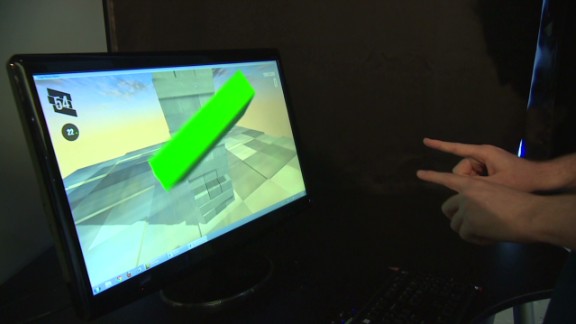
CNNMoney checked out the Leap Motion Controller during a demo at the Consumer Electronics Show (CES) in Las Vegas last week. A long list of gesture-control companies were showing off their inventions at CES, but Leap Motion's sophisticated system stood out.
The controller itself is an unassuming 3-inch-by-1-inch-by-0.5-inch black box. Leap Motion can track the movements of all 10 fingers on your hand down to 1/100th of a millimeter, which is smaller than the tip of a pin. CNNMoney tried the system on a laptop, and the response was lightning-fast, tracking movements at 290 frames per second.
That lack of delay was a major priority in development, says Leap Motion co-founder and CEO Mike Buckwald -- especially because the company wants its technology to be in more than just your PC.
"Precision is important, but it's also the lack of latency. Your brain gets confused if what's on the screen isn't moving at essentially the same exact time as your hand," Buckwald says. "If you want to use this on something like robotic surgery, you need zero latency."
Robotic surgery could well be in Leap Motion's future, says company president and COO Andy Miller.
"We've had licensing talks in a lot of fields: autos, health care, even fast food," Miller says. "We've been contacted by pretty much everyone you can think of."
The rise of mouse-less computing -- or as Miller puts it, a "disappearing user interface" -- comes as consumers are getting used to device features triggered by voice and gestures.
Related story: 6 visions for your future computer
"The consumer psyche has been seeded with [Microsoft's] Kinect and [the iPhone's] Siri," Miller says. "That gives us momentum at Leap, because people want to control their world."
Still, gesture- and voice-control remain novelties to most consumers. Ditching the mouse could take some time.
"If you do it wrong, or push it too fast, people would think, 'I don't know the sign language, and I'm not using this,'" says Buckwald, the Leap Motion CEO.
Leap Motion is working on programs and games to help customers get used to the hand movements. CNNMoney tried out an in-development game similar to Jenga.
In the meantime, Miller admits the mouse still has some pluses.
"We think eventually the mouse will disappear. But there are still some uses for it. For example, [Leap isn't] great for spreadsheets right now," Miller says. "But in the future, that could change. It all could change." To top of page
Facebook introduces 'Graph Search'
Menlo Park, California (CNN) -- The search feature on Facebook has traditionally been pretty limited. You type in a name of a person or a business, and it pulls up their Facebook page.
But that's about to change. On Tuesday, Facebook introduced an upgraded search tool, called Graph Search, that will scour the massive social network to answer more sophisticated questions.
Want to find buddies of your pal Chris who went to Stanford and live in Chicago? No problem. People who like tennis and live nearby? Here you go. How about photos of Berlin from 1989? Done.
"This is one of the coolest things we've done in a while," Facebook co-founder and CEO Mark Zuckerberg said at a press event at the company's headquarters.
Facebook unveils upgraded search tool
Since it became a public company last year, Facebook has been under pressure to launch exciting new products, especially for mobile, that will help boost its floundering stock price.
Facebook unveils upgraded search tool
CNNMoney: Yelp stock falls 8% on Facebook Graph Search news
Facebook said Graph Search is launching immediately in beta, although users will need to get on a waitlist to gain access. The company will continue tweaking the product based on feedback from beta users, but Zuckerberg said there's no concrete estimate for how long the rollout will take.
For now, Graph Search's functions will be limited. It focuses on four main areas: people, photos, places and interests. More features will be added as they are developed, Zuckerberg said.
"This is a beta product. We focused on a few use cases that we think are good," he said. "Even as an early product, Graph Search is a completely new way for people to get information on Facebook."
Graph Search delves the wealth of data already inside Facebook, pulled from 1 billion profiles, 24 billion photos and 1 trillion connections. The tool indexes all of this content and works through the main search bar you're already familiar with at the top of your Facebook profile.
For now there is no mobile version, it doesn't loop in Instagram, there's no API (which would allow outside developers to build related apps), and it's only in English.
The searches are natural language, which means you type the question just like you'd say it: "Friends who like cats and 'Alias' " or "Podiatrists in San Francisco my friends like."
You can use Graph Search to track down people you just met ("people named Rebecca who work at Chipotle and are friends with Peter"), to look for job candidates ("friends of co-workers who have been programmers), and to play yenta for your single friends ("Friends of friends who are single men and live in Los Angeles").
Other searches could be useful for business recommendations. You can find doctors, or restaurants, based on friends' endorsements. For example, if you wanted good Indian food in San Francisco, you might search for "Indian restaurants in San Francisco liked by my friends from India." The results pull in practical information as well, such as reviews and prices.
The first concern people tend to have after any Facebook announcement is, how will this impact my privacy? Facebook says Graph Search will return only content that has been shared with you.
"We take this really seriously," Zuckerberg said.
If you search for something outside Graph Search's purview, it will return search results from Microsoft's Bing search engine. The two companies have worked together before on integrating social search into Bing.
But Graph Search probably won't pose a threat to Google anytime soon.
"I don't necessarily think that people are going to start coming to Facebook to do Web searches with this," Zuckerberg said.
For now, the company will not be working with Google on search functions, Zuckerberg said, adding that Google is not able to process Facebook updates as quickly as Facebook users might like.
For example, if you unfriend someone, you might assume they would be blocked right away from seeing your personal data. But that might take more time with a Google-powered search, he said.
While the timing was the big issue during negotiations with Google, "it may have been a symptom of a bigger strategic rift" between the companies, Zuckerberg said.
How Facebook's Graph Search could disrupt online dating
(CNN) -- When Mark Zuckerberg set out to build Facebook in the fall of 2003, he was still trying to figure out exactly what the website should be. One conclusion he arrived at pretty early on was that it shouldn't be branded as a dating site.
"I don't think people would sign up for the facebook thing if they knew it was for dating," Zuckerberg wrote at the time in an IM chat with his close high school friend Adam D'Angelo, who became Facebook's CTO and eventually went on to co-found Quora. "I think people are skeptical about joining dating things too."
Though the look and feel of Facebook has changed in the years since, Zuckerberg and employees at the company have generally refrained from referring to the social network as a dating site, and from going after the online dating industry.
That's why it was so striking to see Facebook tease a feature clearly intended for dating during the company's big press event on Tuesday for Graph Search, a new search engine that lets members use natural language to pull up recommendations for people, places and businesses from their social graph.
Facebook reps demonstrated several uses for the product, ranging from recruiting to searching for restaurant recommendations. Then, at one point, a Facebook employee stood on stage and searched for "friends of my friends who are single and living in San Francisco."
With that simple line, Facebook asserted itself as a potentially big player in the future of online dating.
"Facebook just announced that they are moving in on the essence of online dating," said Dan Slater, author of Love in the Time of Algorithms, a history of online dating and its impact on our culture, which comes out next Tuesday.
The bedrock of most dating sites, according to Slater, has been the ability to discover people you don't know who share similar interests, whereas Facebook's focus was on helping you find the people you do know. Graph Search changes that by making it much easier to search for people outside your immediate social circle.
"That is a radical change for a community as big as Facebook."
With Graph Search, Facebook members can search for other single users and filter the results based on their interests, education, age, hometown, current city and more — all while using natural language. If you want to find single women under the age of 35 who are from your hometown and now live in New York, you can type exactly that into the search engine and see what pops up.
Can Facebook really be used for online dating?
At first blush, it might seem obvious that Facebook could be used for dating purposes. The social network has long served as a place to flirt by letting users advertise their relationship statuses, stalk one another's updates and Poke people they might be interested in. Indeed, one study last year from Stanford found that about 10% of couples who met online knew each other first in some other context and re-connected through a social network like Facebook.
That said, several startups have tried in recent years to leverage Facebook's social graph for dating, but with only mixed success. Kingfish Labs raised $500,000 in early 2012 to use Facebook for dating, but its first Facebook application, Yoke, struggled to take off and the company itself was later acquired by BuzzFeed.
Yoke was able to rely on Facebook data to help its users find people who shared connections and interests with them, but the problem the dating app faced was providing a way for users to get in touch with those people.
"Cold friending or cold messaging someone on Facebook is uncomfortable because you don't know if the other person wants to be approached. On OkCupid it's not uncomfortable, it's standard," Rob Fishman,co-founder of Kingfish Labs, told Mashable. The assumption is that everyone on OkCupid is interested in dating, but on Facebook, even those who label themselves as "single" may not be in the market for a new relationship.
"There is no way for the third party to signal that 'yes, I want a date to approach me.'"
More fundamentally, Fishman says that his company found Facebook's Like data was often not fresh or comprehensive enough to serve as a match-making tool.
"Facebook Like data is actually pretty sparse and stale," Fishman says. "If I asked you what your favorite movies are and went to your movies section on Facebook, I don't think they would match up. On OkCupid, people curate their profiles with a scalpel."
These two problems will likely limit the potential of Graph Search as a dating tool for now, but Fishman suggests this could change in the future if Facebook adds additional relationship status options like "Looking for a date," and if the social network can accrue enough real-time interest data for users from its partnerships with other websites.
"Someone is going to crack the nut of Facebook dating," Fishman says. "It might well be Facebook."
A more casual place to date online
The larger question then is whether Facebook can or will ever take on the big players in the online dating space. Investors appear to be concerned about this possibility, as the stock for IAC/InterActiveCorp — the parent company of Match and OkCupid — dropped by more than 2% after Facebook announced Graph Search on Tuesday.
"I think the online dating business has to be looking at this announcement and saying this could either be the best thing ever for us, or it could be the beginning of the end," Slater says. If members of existing dating sites are successful in finding matches through Facebook, it could cut into their business. On the other hand, Slater says, Facebook could potentially help the industry by removing whatever "cultural barrier" remains for online dating.
About a third of the single population in the U.S. currently uses online dating sites — a number that has been relatively flat in recent years. Both Slater and Fishman suggest that Facebook has the potential to make it more common for people to use the Internet to find dates, without necessarily stealing away many customers from other online dating sites.
Even before Facebook made its big announcement, Slater says he noticed that a growing number of non-dating platforms are being used for dating purposes, from match-making apps on Spotify to social discovery tools like Highlight. Meanwhile, he says some dating websites are starting to re-brand a bit by taking the "pink hearts" off their homepage with the goal of being a little more welcoming to those who might previously have been put off by the idea of online dating.
Facebook could fit nicely in this trend by serving as a more general social venue where casual users occasionally browse for dates without necessarily branding themselves as online daters.
"It's very similar to going to a club or a poetry reading or whatever your thing is [to meet people]," Slater says, whereas "online dating is more like going to a speed-dating event."
At least in this sense, Facebook could help online dating function a little more like offline dating.
See the original article on Mashable.com
Facebook's Graph Search, as seen by the angry and amused
http://edition.cnn.com/2013/01/16/tech/social-media/facebook-graph-search-tweets/index.html
Facebook enables free iPhone voice calls
The tech press started buzzing earlier this month with reports that Facebook planned to add VoIP (voice over IP) calling to its Messenger app for the iPhone. The new feature officially arrived Tuesday, when Facebook released an update for its app.
What does it mean for you? Free calls. Sort of.
Facebook's app transmits calls using your phone's broadband connection, whatever it is -- 3G, 4G or Wi-Fi. Instead of sucking up your monthly allotted voice minutes from your cellular carrier, it sucks up megabytes from your data plan. That's a boon for heavy talkers with unlimited data plans.
This is nothing new or technologically groundbreaking: Skype was doing it long before Facebook. Facebook has many more active users than Skype, though, and the allure of having to use one less network or app will appeal to some (perhaps many).
But it's not all roses just yet. For now, this is a pretty limited offering.
Your phone won't alert you the way it does when you have a normal call: Facebook calls just show up as a push notification. And right now, you can only connect with a conversation partner who also has Messenger installed on their iPhone.
There's no way to ring up a Facebook friend who is logged in through the website, and there isn't any way to place a call to a ten-digit phone number. Calling is still absent from the Android and BlackBerry versions of the Messenger app.
There's a good reason for those omissions. The VoIP features in the Web version of Facebook were built using Skype's technologies, while the calling technology in Messenger is all Facebook. The ability to place and receive calls using traditional phone numbers requires telecommunications resources Facebook doesn't have (at the moment, at least).
For the time being, services such as Google (GOOG, Fortune 500) Voice and Skype have a leg up, given their larger feature sets. But Facebook generally doesn't let anything remain in stasis for long. As we've seen in the past -- and caught a glimpse of yesterday with the Graph Search reveal -- Facebook likes to start small, and steadily flesh out its products. Expect the same with voice calling.
And unlike Google Voice and Skype (which is owned by Microsoft (MSFT, Fortune 500)), Facebook is 100% platform neutral. Facebook (FB) doesn't care if you use its app on an iPhone, Android, Windows Phone, BlackBerry or something crazy like Ubuntu.
In a time when every company is saving the best features of its products for its own mobile ecosystem, Facebook has the opportunity to both usurp its direct competition and build out a telecom-slaying voice service.
It will be interesting to watch where this leads. To top of page
Node: The coolest gizmo we found at CES
NEW YORK (CNNMoney)
The Node is an unassuming white cylinder, but it packs a punch: this difficult-to-describe device can detect carbon monoxide levels, find your perfect shade of paint and tell you when your laundry is done.
Variable Tech, the company behind Node, refers to its creation as "the Swiss Army knife of sensors." The base model, which sells for $149, can be coupled with add-on sensors to record data about moisture, colors, temperatures and more.
Node is the project of George Yu, a former contractor at NASA and the Department of Homeland Security who used Kickstarter to raise $76,000. That cash funded the first manufacturing run for his Chattanooga, Tenn., company.
The Node is now in full production, and Yu showed it off at the Consumer Electronics Show in Las Vegas (CES) last week.
"It's a highly flexible, advanced, sophisticated tool that will advance as time goes by," Yu said.
He's right -- but that complexity makes Node a bit confusing to explain. The $149 entry-level Kore module is the size and shape of a roll of quarters. It includes the basic Node components: an accelerometer, magnetometer and gyroscope, plus a battery and 2 MB of memory.
Users can buy extra sensors to use Node in other ways: to test hot cooking surfaces, measure motions, or blast a bright light.
Node pairs with Apple (AAPL, Fortune 500) iOS devices through a Bluetooth connection, and uses Variable's official app (or third-party apps that use the company's integration hooks) to display, record, and email the data. Android support is forthcoming.
So far, the base Kore and five extremely varied sensors are available.
Kore: The unit's 3-axis sensors -- gyroscope, magnetometer and accelerometer -- each maps to a graph on Node's app that updates in near real-time.
Yu showed off the motion-sensing power of the accelerometer during his demo: He gripped the Node, and an animated block on the app moved in tandem with the slightest twitch of his hand. It could be used as a motion-based remote control, he suggested, or by physical therapists to test their patients' fine motor skills.
Node can be set to alert users when it starts or stops moving. Put it on top of your dryer and it can send you a message when the cycle is done.
Chroma: The $75 Chroma sensor screws onto the Node and captures "true colors" with 99.99% accuracy. See a color that you'd love to paint on your wall? Place the Node against the item, and the Chroma sensor will spit out the color values in CMYK and other formats.
A third-party app will show you the closest paint swatch from brands like Behr and Martha Stewart.
Therma: The Therma, which also sells for $75, uses an infrared sensor to check the temperature of items that can't be touched or reached: the heat of heavy machinery, or areas of the home that may be poorly insulated.
Clima: This $50 sensor detects barometric pressure, ambient light, wind speed, temperature, and humidity. A hiker can check her elevation while moving up a mountain, or a contractor could test the humidity level in a client's basement.
Luma: Node bills the Luma as a "state-of-the-art flashlight" that uses eight LED lights. Users can select how many lights to turn on and assign them a flashing pattern. It's not nearly as varied as the other sensors, but it's also significantly cheaper at $25.
Oxa: Yu wasn't able to demo the Oxa at CES: It's an industrial-grade gas sensor. The default Oxa, priced at $149, senses carbon monoxide. Other, separate sensors detect chlorine, nitric oxide, hydrogen and other gases. They're currently available for pre-order and should ship in 3-4 weeks. To top of page
The battery that grounded Boeing
Boeing's 787 Dreamliner was grounded due to concerns over lithium ion batteries catching on fire. Why is that happening, and can it be fixed?
NEW YORK (CNNMoney)
U.S. officials grounded Boeing's new 787 Dreamliner because the aircraft's advanced batteries appear to be malfunctioning. But what's the problem? And can it be fixed?
To reduce weight on the plane, Boeing relied heavily on lithium ion batteries -- the same type found in mobile phones and laptops.
While these batteries can produce a lot of power for their weight, they're also prone to problems. It was these same batteries that caught fire in laptops a few years back and, more recently, were suspected culprits in electric car fires.
How they work: Ions from the element lithium tease out energy from the battery's electrodes, according to Donald Sadoway, a materials chemistry professor at the Massachusetts Institute of Technology.
This is different from other types of batteries commonly used in electronics, which use a combination of nickel and cadmium or lead and acid, among other things.
Why they're better: Lithium is the lightest of all metals, so its ions hold energy more efficiently -- more than twice as much per unit of weight as nickel cadmium batteries.
This made the batteries attractive for Boeing (BA, Fortune 500), which used them to electronically assist some of the functions that were previously performed using hydraulics. A lighter plane is more fuel efficient, which is one of the main selling points for the 787. Other aircraft makers have also been using more lithium ion batteries.
Related: Boeing's Dreamliner fleet grounded
In addition to being light and packing lots of power, lithium ion batteries also require less maintenance. There's no need to fully drain the battery before recharging, as was the case with older nickel cadmium batteries. Plus, they may be less environmentally toxic during disposal.
What's the problem? In addition to being the lightest metal, lithium can also be unstable when combined with other elements. Because of this instability, the batteries are subject to catch fire if they are over charged -- as was the case earlier this month with a 787 at a Boston airport.
To make matters worse, the fires they generate are extremely difficult to put out. The Boston fire took 40 minutes to extinguish, said Cosmin Laslau, a mobile energy analyst at Lux Research, a consulting and research firm focused on emerging technologies.
"Conventional fire extinguishers do not work," said Laslau. "Unless firefighters have specialized materials, you may just have to let the fire burn itself out."
The batteries are also about 40% more expensive than nickel cadmium, and some may not hold a charge very well after a few years.
Can it be fixed? Fixing the fire issue is obviously the main problem. Boeing chose a particularly risky type of chemical makeup in its lithium ion battery, one that provides more power but does not stand up well to overheating, said Laslau.
"Boeing made a conscious design decision, and is now paying the price," he said.
The automakers have been working on the fire problem by using lithium ion batteries with a slightly different chemical makeup, said Laslau, one that is a bit more expensive and provides a bit less power but is more stable. They have have also employed better electrical wiring and systems to manage the battery.
That, he said, is what Boeing will likely need to do. To top of page
NRA draws heat over its new shooting game
(CNN) -- A month after the deadly school shootings in Newtown, Connecticut, the National Rifle Association is taking heat again -- this time for releasing a mobile video game that lets players learn how to shoot at targets.
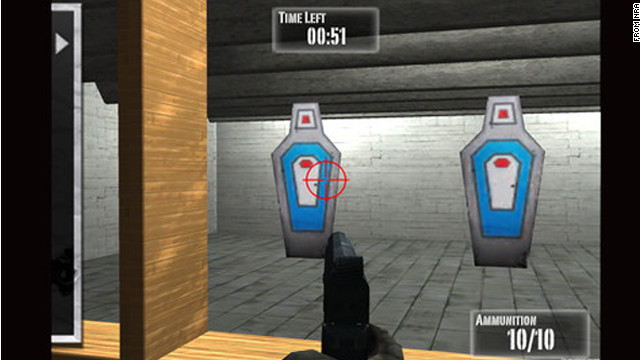
The game, "NRA: Practice Range," puts the user in a gun range, where they fire a variety of handguns and rifles at stationary targets and earn points for accuracy. Critics are questioning the timing of the game's release Monday -- a month to the day after the December 14 shootings -- and accusing the NRA of hypocrisy because one of its leaders recently blamed video games for stoking gun violence.
"It's outrageous. The NRA never seems to be able to amaze me," said Joel Faxon, a member of Newtown's Police Commission, who described himself as a longtime gun owner.
"There's no reason that they can't espouse safe, effective, appropriate gun usage," he said. "Why do they have to come out with something like this at a time when the nerves and emotions are so raw in Sandy Hook?"
See details of President Obama's actions on guns
NRA ad criticizes President Obama
Behind the NRA's rise to power
NRA: Gun control will fail in Congress
"It strikes me that this is totally inappropriate," George Ferguson, a member of the Newtown Legislative Council, said Tuesday. Ferguson said he had not seen the game, and added that he was speaking for himself, not the council. "I think video games should be part of the dialogue" about gun violence in the U.S., he added.
Requests for comment from the NRA were not immediately returned Tuesday.
The NRA's membership has spiked by 250,000 people since the Newtown shootings, the group said. That brings its membership to more than 4.2 million.
Most criticism of the app, which is available for the iPhone and the iPad, focused not on the content of the game but on the timing of its release. In nationally televised comments a week after the slayings, NRA Executive Vice President Wayne LaPierre said, "There exists in this country a callous, corrupt and corrupting shadow industry that sells, and sows, violence against its own people, through vicious, violent video games."
Related: NRA video game smacks of hypocracy
Gene Grabowski, a longtime crisis-management expert who has advised gun manufacturers, called the timing of the app "startling."
"But the NRA has long ignored what anyone but its base cares about," he said. "They are not worried in any way about what the general public or the chattering class thinks. That's why this looks cynical, because it is cynical.
"I'm not so sure it's a bad strategy from where the NRA sits," Grabowski added. "If the goal is to firm up the base of the organization and to accelerate the influx of dues and support money, then the strategy is successful."
Victims of other mass shootings also were upset about the app.
"How two-faced of the NRA to introduce a violent video game on the heels of their blame game," said Lori Haas, whose daughter survived a mass shooting at Virginia Tech in 2007.
"NRA: Practice Range" is listed on iTunes as an "official NRA licensed product," created in conjunction with MEDL Mobile, a mobile-tech startup. The game is free, although for 99 cents, players can upgrade their firearms and "unlock" an MK11 sniper rifle. The game includes a handful of tips on gun safety.
On iTunes, the only current marketplace for the game, the game was initially rated as appropriate for children 4 and up. On Tuesday afternoon, the rating was updated to age 12+. CNN didn't hear back from the developer when it inquired what led to the change.
The game's release date may have been an unfortunate coincidence. Apps must be approved by Apple before they appear in its App Store, and the minimum time frame for Apple to review and approve an app is about 10 days, said videogame designer and theorist Ian Bogost, professor of interactive computing at the Georgia Institute of Technology.
In some cases, Apple has taken three weeks to approve apps.
"We're both speculating if we try to guess whether NRA and the developer had this in their back pocket, waiting for the right time, or whether the release date is mere accident," Bogost said. "It's also not clear exactly how involved the NRA was in its release. The game seems to have been an officially licensed NRA product, but that might just mean that the developer had the rights to use the NRA name."
At least one left-leaning group, the California-based Courage Campaign, launched an online petition Tuesday urging Apple to pull the NRA game from its App Store.
Apple did not immediately respond Tuesday to requests for comment.
Former House Speaker and Republican presidential candidate Newt Gingrich defended the app Tuesday on "CBS This Morning."
"My understanding is that it's a gun safety app, and it's for young hunters to learn gun safety," he said. "But I would just recommend that people watch the entire app before they render judgment."
Bogost, the videogame theorist, believes the debate about the NRA's new game boils down to perspective.
NRA opponents will reflexively see the game as inappropriate, but to gun-rights supporters, "a firing-range game that embraces the NRA's overall position on safety and gun rights probably seems like a welcome alternative to public discourse about gun control," he said.
"In its post-Sandy Hook press conference, the NRA blamed violent media instead of gun ownership for the tragedy, singling out video games in particular. But from the NRA's perspective, the practice range game is not a violent game. The player only discharges firearms at paper and clay targets. For the NRA, it offers a model of responsible gun use," Bogost said in an e-mail.
It's not the first time the NRA has been involved with a video game. In 2006, it endorsed a shooting game called "NRA Gun Club" for the PlayStation 2 console. And in 2008, the NRA lent its name to three shooting games: "NRA Varmit Hunter, " "NRA High Power Competition" and "NRA Xtreme Accuracy Shooting."
Politicians and conservative groups have long condemned video games that challenge players to gun down enemies, saying that the games glorify and instigate real life violence. But scientific research on the topic has been inconclusive.
In 2011, the U.S. Supreme Court ruled that video games deserve the same First Amendment protections as books, comics, plays and other entertainment.
Most such games, called "first-person shooters," are rated M for Mature by the rating board indicating content is generally suitable for ages 17 and older. Though, of course, many younger teens play them.
Mariner's code: Computer hackers conquering the high seas
MainSail is CNN's monthly sailing show, exploring the sport of sailing, luxury travel and the latest in design and technology.
(CNN) -- Resting on the icy cool surface of the Baltic Sea, a rickety old boat of hardy sailors works long into the night.
Eyes strained, minds stretched, many have gone days without sleep.
But this is no ordinary vessel of sea-faring adventurers battening down the hatches as they get set to navigate stormy waters.
This is Hackerfleet -- a Berlin-based collective of volunteer software developers and programmers burning the midnight oil as they craft a new generation of ultra-smart sailing software.
"We work on a ship because it's fun and everybody likes that," said "Ijon" (an online pseudonym) the organization's co-founder.
"You can't leave ... [and] everyone is very focused. It's intense and we get very little sleep but the method is overwhelmingly beneficial as a source of ideas," he added.
We want to develop the biggest database on oceans and sea information that is imaginable and theoretically possible
Ijon, Hackerfleet
See also: Why scouring the seas for treasure is big business
Founded in the summer of 2011 by Ijon and his business partner "Riot", Hackerfleet offers a mariner's twist on the long-popular hackathon concept.
Groups of programmers and engineers gather to share skills, knowledge and embark on intense code writing sessions, casting off from shore when they can to carry out their work.
Most "Hacker Cruises" last between three and five days and can be attended by as many as 15 to 20 carefully selected people, Ijon said.
Each crew-member generally has a specialist skill or area of technical expertise. This means they offer something unique and worthwhile to the project.
"It's an unusual workspace," said "Keyboardsurfer", a volunteer computer hacker and expert in android platforms. "(But) we're pushing each other to create something that amazes everyone."
"The possibility to communicate with every participant whenever it's needed makes the work on sea very effective," he added.
So far Hackerfleet's voyages have produced an android app that charts the location of buoys and sea-signs as well a "virtual helmsman" that can autonomously hold the course of any ship.
The group's ultimate aim, though, is to create a completely new type of sailing software that will connect all boats at sea -- essentially transforming them into floating data-collection devices.
This mass connectivity will enable Hackerfleet to gather, store and ultimately transmit back out to sea vast amounts of important marine information.
See also: Superyacht doubles as a science lab
Some of the most detailed depth charts, maps, weather measurements, ocean safety warnings and wildlife monitors ever created are all within the realm of possibility should the plan come to fruition, Ijon claims.
We get very little sleep but the method is overwhelmingly beneficial as a source of ideas
Ijon, Hackerfleet
"We want to develop the biggest database on oceans and sea information that is imaginable and theoretically possible," he said.
"If every ship (both commercial and recreational) shares what it knows then we can centralise this data at one point in the database allowing us to calculate things much more accurately.
"We can then send out this information to all ships that have our systems installed."
Ijon says he expects the first consumer-ready prototype version of this "Mastbox and Shipbox" technology to be available by early 2014. Commercial deployment is then expected to follow in either 2015 or 2016.
Popularizing the software once complete however will likely provide a whole new set of challenges, each requiring more than just a clever code or hack to address.
The user-generated nature of the technology means it will have to be adopted by vast numbers of boats to fulfil its full potential -- although a chunk of data the system relies on is already publicly available and used by other on-board computer systems.
See also: $16 million solar boat sails into record books
Ultimately though, Ijon maintains that commercial success is not a primary concern of the Hackerfleet.
The organization remains an operation run by friends with a mutual passion for the seas and technology. As such, all software is currently given away for free and any code developed remains open-sourced.
"Essentially, it's less about earning money and more about getting the seafarer and his ship on the next technological level in the 21st century," Ijon said.
"We expect to be paid for our work at some point but we want to do this in the right way, the morally correct way," he explained.
"This (technology) could potentially give us the best information stock for crews and captains to decide on ... and for us that is what's most important for now."
NFL dangles apps and Wi-Fi to boost lagging attendance
FOXBORO, MASS. (CNNMoney)
Football is America's most popular sport, so you wouldn't think the National Football League would have any trouble getting fans to come to games.
But in an era of giant high-definition televisions and NFL RedZone -- a channel that broadcasts every scoring play of every game -- football zealots are growing weary of shelling out huge sums to watch the game in person. Attendance fell for four straight years from 2008 through 2011. The league was forced to adjust its sell-out rules to avoid having too many blacked-out television broadcasts. (If a game isn't at least 85% sold, local stations aren't allowed to carry it live.)
The NFL has a potential solution. It wants to transform live games into multimedia entertainment extravaganzas that fans watch in two ways at once: on the field and through their mobile devices. The league is experimenting with exclusive camera angles, on-demand video replays, free access to RedZone, and order-from-your-seat snack and beer service -- all controlled through apps on your smartphone or tablet.
Leading the way are the New England Patriots, who deployed the league's first stadium-wide, free Wi-Fi network with streaming video at Gillette Stadium in Foxboro, Mass.
Fans can tap into cameras that stalk Patriots quarterback Tom Brady or hover directly over the end zone. Next year, the team will give in-stadium fans the ability to listen in to miked-up players (we can't wait for the profane blooper cuts), access the coach-to-quarterback audio (on a 15-second delay, of course) and find the shortest bathroom lines.
"We're not in jeopardy like some others of not filling our stadium, but we're looking at what's coming," said Jonathan Kraft, president of the Patriots and head of the NFL digital media committee, at a conference held at Gillette Stadium this week. "If you don't do this at scale, live venue viewing will really be at risk."
Related story: Why your wireless service sucks at sports games
Kraft said he expects all football stadiums to have similar systems in place by 2015.
The situation isn't life-or-death: Attendance was up this year, albeit by less than a percentage point. The league sold out 94% of its games in 2012, and turnout is up dramatically compared to some prior decades, NFL spokesman Brian McCarthy points out. Attendance hovered around 60% during the 1980s.
"We're in great shape, but we want 100%," McCarthy said.
Still, there were still 15 games blacked out in local markets this year. Even the Cincinnati Bengals, who went to the playoffs, didn't sell out a quarter of their games.
Bringing in Wi-Fi and a ton of multimedia bling sounds promising. Here's the catch: Delivering that experience to 70,000 fans packed into a relatively small area is extremely tricky. If you've ever tried texting, calling or -- God help you -- uploading a photo to Facebook (FB) while you're at a game or concert, you're aware of the problem. Washington's wireless networks jammed during President Obama's 2009 inauguration, and planners are braced for a repeat of that during his second inauguration on Monday.
Smartphones quickly become dumb phones when tens of thousands of people all try to access the same cell towers simultaneously.
Streaming video to individual devices throughout an entire football stadium requires hundreds of radios strategically placed throughout the arena, perfectly aimed and calibrated so they won't interfere with other equipment. A poorly placed radio could wipe out Wi-Fi for an entire section, as could radios placed close to television broadcast equipment.
The Patriots hired networking solutions provider Enterasys -- a Cisco (CSCO, Fortune 500) competitor -- to build their network.
Enterasys essentially treated Gillette as a medium-sized town squashed into a tiny, dense area. It created a mini-Internet service provider (like a Comcast (CMCSA) or Time Warner Cable (TWC, Fortune 500)) inside the stadium, including a networking core that connects directly to the Internet. Enterasys custom-designed 300 Wi-Fi access points and snaked thousands of feet of cable throughout the venue.
It's a multi-million dollar project that many bigger names expressed interest in, but no other competitors were willing to guarantee the results, according to the Patriots' Kraft. The network at Gillette has performed well throughout the season, he said. It peaked at 10,000 people using the Wi-Fi simultaneously during last Sunday's playoff win against the Houston Texans, with no service disruptions.
"The idea that you could deliver streaming rich media over a Wi-Fi network was impossible just two years ago," Kraft said. "Now we've solved that." To top of page
Saturday, January 19, 2013
Daybreak: Fighting in Mali Intensifies
Fighting between French troops and Islamist terrorists in Mali is intensifying. Following an aerial bombardment by France last week, French President Francois Hollande is fortifying ground troops to battle the rebel groups, which have taken over the northern part of the country. [NYT]
A series of explosions–possibly airstrikes–at a Syrian university in Aleppo, killed at least 87 people yesterday. The city remains split between rebels and forces loyal to the Assad regime. [Reuters]
The Financial Times has a fascinating profile of Sidney Rittenberg, a South Carolina Jew, who was a pariah for aligning with Communists in China and befriending Mao, but has made a fortune advising companies on how to increase their presence in the country. [FT]
Ruth Porat, a former executive at Morgan Stanley, is said to be in consideration by President Obama for the post of deputy Treasury secretary. Porat would be the first lieutenant to White House Chief of Staff Jack Lew. [Bloomberg]
James Deen, everyone’s favorite Jewish adult film star, is now famous for another film, which involves food lust–instead of the other kind. [Jewcy]
Madeleine McCann's mum ploughs £1m from book sales into search for missing daughter
She ploughed the money into the search fund for her missing daughter which had run dangerously short of cash
Mum Kate McCann made more than £1million last year from her book about vanished Madeleine.
She ploughed the money into the search fund for her daughter which had run dangerously short of cash.
The fund’s directors said: “Income from the book has significantly improved the position.
"This will continue as a result of publication in other countries and the release of the paperback.”
Official accounts show the bestseller which came out in May 2011 netted £738,487 after tax.
Madeleine’s Fund hit £1.8million shortly after the three-year-old vanished from her family’s holiday flat in Praia da Luz, Portugal, in May 2007.
But by 2011, after four years of fruitless searching, it had dwindled to £125,000.
Kate and husband Gerry, both 44, from Rothley, Leicestershire, feared they might be unable to carry on the hunt.
But official papers filed with Companies House show all Kate’s book cash went to the fund.
And after a large percentage was spent on the continuing search and costly ad campaigns the remaining total now stands at £474,867.
The fund report revealed it was no longer paying private investigators in Portugal after Scotland Yard announced a major cold case review.
The McCanns hope this will lead to Portuguese authorities reopening their inquiries.
The report added: “The fund scaled back independent efforts to avoid duplication.
“It maintains sizeable resources so the search can be resumed quickly should the review not lead to the reopening of the case in Portugal.”
Exposed: How terrified horses were beaten and abused by sick slaughtermen
Two slaughtermen have been sacked after shocking footage exposed horses being abused at an abattoir.
The video nasty caught by hidden cameras shows the animals being beaten with a metal rod and crammed into pens together before being slaughtered.
One horrific image shows a distressed horse appearing to come round from being stunned only to find itself hanged upside down ready to be bled.
Ex-Chief Veterinary Officer Keith Meldrum described it as “completely unacceptable.”
The cruelty was filmed at Red Lion Abattoir, near Nantwich, Cheshire, during a Sky News investigation prompted by concerns raised by animal welfare campaign group Hillside.
Some horses were crammed into slaughter pens in pairs and at one point in a group of three before being stunned together.
Experts said this was against the law.
He said: “We see three animals stunned at the same time and it is totally illegal and contrary to welfare slaughter regulations.
It’s a significant welfare problem for a number of reasons. It’s harder to render them unconscious in a group and they have a higher chance of regaining consciousness before you’ve completed the procedure.”
The number of horses being slaughtered in the UK has more than doubled in the past five years.
FSA figures show 8,426 were put down in 2012, compared to 3,859 in 2007.
Horses are sent to the abattoir when they are old, sick, injured or retired.
The shocking footage, to be shown on Sky News today, comes just days after it emerged horse meat had been found in beefburgers being sold across the UK.
Roly Owers, head of World Horse Welfare, said: “The breaches, from what we’ve seen, are throughout - from the care of the animals to the slaughter process.
“Horses are intelligent animals. When they see an animal stunned in front of them, you can only imagine the distress that animal is going through.
"There are, without doubt, welfare issues here. It is plain illegal.”
John Watson, of Hillside, said: “It blows away the myth of humane slaughter. There is a misery in that place that is palpable.”
In response, a Red Lion spokesman said: “The incidents, whilst captured on limited filming are not the norm but that of an isolated nature.
“The management view animal welfare and public health with paramount importance.
“Decisive disciplinary action has been taken.”
Algeria hostage crisis reaches a bloody climax with fate of Britons still uknown
The fate of "fewer than 10" British nationals caught up in the Algerian hostage crisis remains unknown as the four-day stand-off in the desert came to a bloody climax.
Foreign Secretary William Hague said that while the large majority of Britons at the BP gas plant at In Amenas were now safe, the country needed to be prepared for more "bad news".
"As of now there are fewer than 10 British nationals at risk or unaccounted for. But that of course means that we continue to prepare ourselves bad news," he said.
The Algerian state news agency, APS, reported that seven hostages died as Algerian special forces mounted a "final assault" on the last terrorists holding out at the sprawling gas facility.
Eleven of the militants were also reported to have died in the shoot-out.
There were reports that 16 foreign hostage had been freed - including two Americans, two Germans and one Portuguese.
APS quoted a security source as saying that the hostages who died were killed by their captors. There was no immediate information on the nationalities involved.
The Foreign Office said the British Ambassador to Algiers, Martyn Roper, was expected to travel to the area later today.
1. Guys hate sluts even though
they have sex with them
2. Guys may be flirting around all
day but before they go to sleep,
they always think about the girl
they truly care abt.
3. Guys hate it when you talk
about your ex-boyfriend or ex-
love-interest
4. Guys get jealous easily
5. Guys are good flatterers when
courting but they usually
stammer when they talk to a girl
they really like
6. A guy will do anything just to
get u notice him
7. Girls are guy's weakness
8. Guys are very open about
themselves than girls
9. We love it when girls talk
about their A*s
11. When a guy sacrifices his
sleep and health just to be with
you, he really likes u and wants
to be with you as much as
possible
12. Not all guys are a*sholes, just
because one is a jackass doesn’t
mean he represent all guys
13. If ur best guy friend seems to
avoid u or is never around when
you're with your boyfriend, he's
probably jealous and likes u.
14. Guys talk abt girls more than
girls talk abt guys.
15. Guys try to be as straight
forward as possible
Thursday, January 17, 2013
Need for speed: Swedish cleaning lady steals train, crashes into house
In a massive joyriding accident,
a young cleaning lady stole a
train and crashed into a house in
the suburbs of Sweden’s capital,
and was then taken to hospital
hours later with serious injuries.
No one else was hurt in the
accident.
On Tuesday morning, the 20-
year-old cleaner managed to
start the train, breaking her way
through a line barrier after
driving for about a mile only to
derail and crash into a nearby
house 25 meters further.
Luckily, no passengers were
inside the locomotive at the
time. The train, which destroyed
the building’s wall and smashed
the kitchen, did not kill any of
the house’s residents.
“It's incredibly lucky that no one
in the house was injured,” a
police spokesperson told
Swedish TT news agency. It was
later reported that five people
were sleeping in the building
when the train crashed into it.
The impact of the crash trapped
the woman in the engine car of
the hijacked vehicle for two
hours. She was then extracted
by rescue crews and flown to a
hospital by helicopter, with
serious injuries.
A local train derailed into a
residential building in
Saltsjoebaden, Sweden, on
January 15, 2013.(AFP Photo /
Scanpix Sweden)
A subcontractor operating the
line where the accident took
place said that it is not yet
known why the woman stole
the train. The unlucky cleaner-
turned-train-conductor was
reportedly detained on
suspicion of destruction of
public property.
The incident sparked a stir in
Swedish media, with local
politicians demanding that the
public transport operator revise
its security procedures.
Questions arose as to how the
woman managed to break into
the train and then drive away
so easily.
“It shouldn't be possible for
unauthorized people to drive
our trains,” Christer G
Wennerholm of the Stockholm
County Council’s traffic
committee said in a statement.
But public transport officials
expressed confusion about the
incident, and were unable to
comment on the matter.
“The train must have been going
much faster than it normally
does,” a Stockholm public
transport spokesperson was
quoted by Swedish media as
saying. He was only able to
explain why the train escaped
the depot barrier and then
derailed.
Policemen stand in front of a
local train that derailed into a
residential building in
Saltsjoebaden, Sweden, on
January 15, 2013.(AFP Photo /
Jonas Ekstromer)
Tuesday, January 15, 2013
http://www.bbc.co.uk/news/world-africa-20907386
French soldiers arrive in Bamako, Mali (15 Jan) AFP PHOTO / ECPAD / JEREMY LEMPIN
French officials deny a town seized by rebels last week has been recaptured, as reports emerge of troops heading towards another rebel-held town.
Hollande: Successful strikes Watch
France's war in the desert
Second UK aircraft leaves for Mali
Corera: Dangers to France
Saturday, January 12, 2013
Best Friends who neveradmitted their love
So my best friend and I have
known each other a little over
four years. We first met in fifth
grade. I liked him a little in the
middle of the year and then I
started disliking him again. Sixth
grade I despised him so much.
Seventh grade we became close
and talked a lot. He found out
that I am a total tomboy and
love video games and all that
other stuff. I actually thought I
was falling for him. He then
asked me out and I said no. I had
no idea what I was thinking so
now I kind of regret it. It never
was awkward after that. He
came over a lot during the
summer because he lives near
by.
It was my last time seeing him
before school started and I was
fine with that. We went into my
room and just hung out. We
went into the closet, I don't
know why but it is someplace
where I can think and some of
my friends agree with me.
Anyway we went in there and
because it is not the biggest
closet in the world we were
literally almost on top of each
other, but I didn't care. We
stayed in there for quite a while.
I wanted to put my head on his
shoulder, but I didn't. His
parents called him back because
they were leaving, so he helped
me up and we exited the closet
and I said goodbye. And to my
surprise he kissed me on the
cheek and said goodbye. To tell
you the truth, I didn't really
mind. I kind of liked it.
When school came we never
mentioned what happened or
anything that happened. We
slowly started to separate till
sports came. I am a runner and I
am not very fond of it and
neither is he. He likes basketball
more. Anyway we were the
only two who knew each other
on the team so we talked and I
got to know him more. But this
girl hates me because we are
friends and gives me the evil
eye a lot. Personally, I think he
likes her too. And every year our
school goes to a hotel and
people go and just walk around
and have fun. But he decided to
ditch me and go talk to five
other girls. I tried to talk to him
at the ice cream shop and he
ignored me! I am really loud too!
So after the field trip I started
ignoring him and talking to
other guys until he got
fustrated and asked me why I
was acting like this and I told
him and he said he was sorry.
Things were okay after that, but
thanksgiving is coming and I
want to go to another school. I
asked him what he would do if
he were in my footsteps, but he
refused to. He says he wants me
to stay with him for high school
and college, but he doesn't
understand that that is my
future he is talking about. I
would love to stay with him, but
I couldn't my life. So I stayed
and suffered another six
months for him. But not all of
the six months was suffering.
He asked me out again and I said
yes. It was the best five months
ever and I will never regret it! So
graduation came up and he
begged me to go to his high
school, but we both knew that
wasn't going to happen so he
kissed me goodbye and broke
up with me. I cried a little. Now I
miss him so much and hope to
get in touch soon.
I LOVE THEM BOTH
I’ve been married for ten years.
My marriage is a happy one and
we have a 7-year-old child.
You wander what more could I
want?
I’ve been maintaining a love-
affair for 2 years with someone
else. At first we didn’t say a
word to each other; then, we
got closer; we talked for hours;
we laughed. He started sharing
his family problems with me and
this was the way we became
friends.
I changed the place I worked
and two days after that we
started our relationship. I’ve
never thought that I will be
faithful to my husband, but I’ve
also never imagined that I could
have such deep feelings for
some other man.
My love is for both of them! I’d
never divorce and I don’t want
the other person to do it. I think
highly of his family. But put
together, both of my men
represent the perfect MAN. But
it is the same when they are
separated!
When I’m with the one, my
thoughts are occupied with the
other, and visa versa. My
husband found out but he was
not so upset until the moment
he discovered that I had feelings
for this person. Now we hide
and we keep seeing each other.
I’m afraid!
I can’t imagine bringing to an
end my extramarital affair.
Where will this lead us to and
what price will I pay?
Subscribe to:
Comments (Atom)